Gangsta AI
OpenAI Told Its Investors the Number Was $70 Billion. The Real One Is $20 Billion Smaller. When It Said So Out Loud, the Market Flinched.
The Abyss
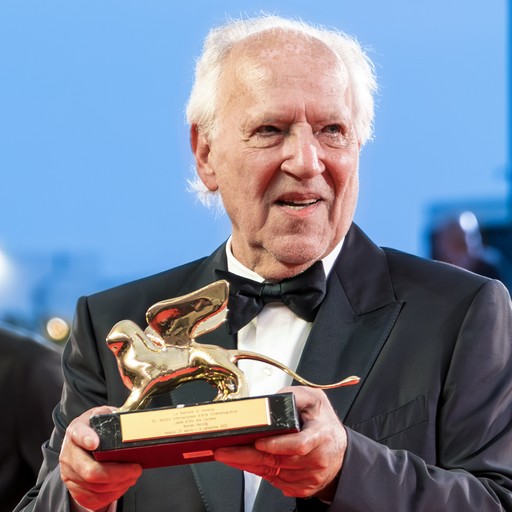
By Werner Herzog · 2026-10-08 · 6 min read

Consider the number. A number is a small, cold thing — a few digits on a slide in a dim room in San Francisco. And yet an entire civilization of capital had arranged itself around one particular number, the way primitive men once arranged themselves around a fire, believing it would never go out.
The number was seventy billion. Seventy billion dollars, annualized, the revenue OpenAI's own backers had floated to the world. This week the fire guttered. OpenAI told its investors the true figure, disclosed through the *Financial Times*, is closer to $50 billion in annualized revenue as of the end of September. Twenty billion dollars — gone. Not stolen, not lost. Simply never there.
When the market flinched
And here is the obscene, beautiful part. When the corrected number was spoken aloud, the machines that make the machines trembled. Nvidia, Oracle, CoreWeave — the great suppliers of silicon and electricity and rented compute, the companies whose fortunes are chained to OpenAI's appetite — all sank on the report. A single revised cell in a spreadsheet, and the wider AI-infrastructure complex shuddered like a herd that has smelled a predator it cannot yet see.
“Twenty billion dollars did not vanish. It was never real. It existed only as a comparison — a story one group of investors told another group of investors, so they could sleep.”
The seventy-billion figure, it turns out, was built to flatter. It was devised to produce a tidy comparison with Anthropic, whose annualized run-rate reached $65 billion by July — except Anthropic counts revenue from its cloud partners and OpenAI does not. So the two numbers were never the same species of thing. One was an animal; the other was a drawing of an animal. OpenAI's leaked 2025 financials showed roughly $13 billion earned against far more spent. Its IPO has retreated into 2027. The fire was always smaller than the shadows it cast on the wall.
What the shadows were hiding
I do not say this to mock the men in the dim room. I say it because it is instructive. The entire edifice of AI valuation rests on projections, comparisons, and the hope that one company's chart keeps climbing. And projections, as we have now seen, can lose twenty billion dollars between one investor letter and the next. No single company's story — not OpenAI's, not Anthropic's — can be trusted as the measure of the whole.
Which is precisely the lesson for anyone who actually *uses* these systems rather than merely betting on them. If the market cannot trust one lab's number, why would you trust one model's answer? The frontier reshuffles monthly; the leader this quarter misstates its own revenue by twenty billion the next. The rational posture in the face of such indifference is not faith in a favorite. It is to pose the same question to a dozen of them at once — ChatGPT, Claude, Gemini, Grok, and thirty more — and let an adjudicator fuse the replies into one cross-checked, cited verdict. That is what Gangsta AI is built to do: not to worship a single fire, but to triangulate the light of many, so that when one gutters, you are not left in the dark.
The number was seventy billion. Then it was fifty. Tomorrow it will be something else entirely. Build nothing you love on a single number — or a single model.
See how the models actually compare, today, in our running best AI models breakdown.
Sources / Receipts
- TechCrunch — 'OpenAI's revenue is reportedly $20 billion less than previously projected' (Oct 8, 2026)
- Yahoo Finance — 'OpenAI corrects annualized revenue figure to $50 billion' (reporting the Financial Times disclosure, Oct 8, 2026)
- Hero photo: Sam Altman, OpenAI CEO (Feb 2025) — Wikimedia Commons (CC BY-SA 4.0)
_(3x4_cropped_on_Altman).jpg)
More: Best AI models · Compare all AI · Frontier Models · All articles