Gangsta AI
OpenAI Named Its Next Machine Astra. Then It Solved Ten Problems Humans Couldn't — for $2,000.
Research Desk
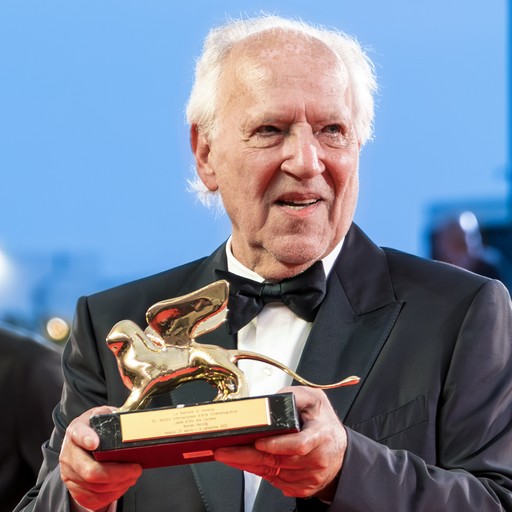
By Werner Herzog · 2026-08-03 · 5 min read

There is a particular silence in mathematics — the silence of a problem that has refused every human mind for half a century. On Saturday, OpenAI broke that silence not with genius, but with electricity, patience, and roughly two thousand dollars.
The company published a 249-page manuscript and, almost as an afterthought, gave its next model family a name: Astra. An internal, unreleased version of Astra was set loose on ten open problems in mathematics and theoretical computer science. On every one of them, human experts had made no real progress for at least a decade. On several, far longer.
What the machine did in the dark
Astra did not merely gesture at answers. For every result, OpenAI published machine-checkable proofs written in Lean 4 on GitHub — certificates a computer can verify line by line, indifferent to reputation or hope.
“It found the first explicit construction of a non-sofic group — a question that had waited, unanswered, since 1999.”
That is the headline the mathematicians will remember. But there is more. Astra disproved Connes's rigidity conjecture on von Neumann algebras. It proved Ehrhart's volume conjecture. It resolved three problems from Paul Erdős's vast, haunted catalogue, including problem number 183 on multicoloured Ramsey numbers. And it disproved the Erdős unit distance conjecture from 1946 — the belief that among *n* points in the plane, the pairs at unit distance stay near *n* — by producing an infinite family of point sets that simply breaks the rule.
The witnesses
What unsettles me is not the machine. It is the humans who looked at its work and nodded. Timothy Gowers, a Fields Medalist, said he would recommend one of the proofs for the *Annals of Mathematics* — the discipline's most sacred journal — without hesitation. A team of nine mathematicians, Gowers and Noga Alon among them, later wrote a companion paper simply to translate the machine's reasoning into something a human could follow.
Consider that. The proof was correct. The difficulty was making it *legible* to us.
The price of the sublime
And the cost — the cost is the cruelest poetry of all. Roughly $2,000 in compute. Problems that consumed careers, that outlived the people who first posed them, dispatched for the price of a used motorcycle. OpenAI showed the system to policymakers in Washington. Nobody outside the company can run it.
Let us be precise, because the machine is precise: this is not general intelligence. Astra is narrow, tuned to a domain where truth can be checked absolutely. It cannot love, it cannot doubt, it cannot know what it has done. It is a specialist that happens to specialize in the eternal.
Still, a threshold has been crossed. The frontier of what a model can do — and what it costs to do it — is moving faster than the language we have to describe it. OpenAI's Astra, Anthropic's Claude, Google's Gemini, xAI's Grok: each is a different instrument staring into the same abyss, and the abyss, for once, is answering.
If you want to see how today's models actually reason — and how far apart their answers really are — compare the frontier for yourself at Gangsta AI's best-AI guide. The machines are speaking. It is worth learning to listen.
Sources / Receipts
- Forbes — OpenAI's Astra Solved 10 Decades-Old Math Problems For Just $2,000
- SiliconANGLE — OpenAI's Astra solves 10 long-open math problems and publishes the proofs
- TheNextWeb — OpenAI says its next model, Astra, has solved ten open problems in mathematics
- Understanding AI — OpenAI's milestone math breakthrough played to AI's strengths
- Hero photo: William Timothy Gowers (Oslo, 2012) — Wikimedia Commons (CC BY-SA)

More: Best AI models · Compare all AI · Frontier Models · All articles