Gangsta AI

By The Gangsta AI News Desk · 2026-09-09 · 4 min read
For a hundred years, the equations that describe how water swirls and air flows have carried a haunting open question: can a perfectly smooth fluid, following the rules, ever tear itself into an infinity? On Saturday, September 5, 2026, a machine answered — and it took roughly 88 hours.
OpenAI says an unreleased model deployed as many as 10,000 AI agents working in parallel to resolve the Navier–Stokes existence-and-smoothness problem, one of the seven Millennium Prize Problems the Clay Mathematics Institute posted in 2000 with a $1 million bounty on each. Only one of the seven had ever fallen before. The agents reached the answer in about 88 hours; formalizing and machine-checking the proof in Lean took another 17 hours, run through GPT-6 Astra.
“The model didn't prove the fluid stays smooth. It proved the opposite — that it can break.”
The result describes a scenario of *finite-time blowup*: a vortex that tightens and spins ever faster until the math itself goes singular, all while the fluid's total energy stays bounded. That's the kind of counterexample mathematicians have chased and doubted for decades — and it's why the story detonated across CNN, CNBC, Quanta, and Semafor within hours.
Then the credit fight started
Not everyone is applauding. Mathematician Tristan Buckmaster, who with collaborators had raced out work resolving crucial sub-questions of the same problem, accused OpenAI of muscling in on human research that made the machine's leap possible. The proof still faces the ordinary gauntlet every claimed solution gets: months of scrutiny before the community — and the Clay Institute — calls it settled. A Lean file that type-checks is not yet a Fields Medal.
What it should actually change about your day
Here's the uncomfortable part for anyone deciding which AI to trust. A single lab, on a single weekend, made a claim that will take the rest of the field months to confirm — and its own headline number came wrapped in a dispute over who really did the work. That is the texture of this entire era: astonishing capability, shipped fast, with the fine print still being written.
Which is exactly why leaning on one model's word — for a proof, a diagnosis, a contract clause, a line of code — is the riskiest move on the board. The models disagree constantly, and the disagreements are where the errors hide. When OpenAI, Google, and Anthropic are each capable of a genuine breakthrough *and* a confident mistake in the same week, the sane workflow is to put the question to all of them at once and see where they converge.
That's the whole idea behind Gangsta AI: ask the same hard question across ChatGPT, Claude, Gemini, Grok and 30 more, watch them show their work, and get one cross-checked, cited verdict instead of gambling on whichever lab made the news today. Verification, not vibes — the same standard a 90-year-old math problem is about to be held to.
Curious which model you should actually trust for the job in front of you? Start with the best AI for the task.
Sources / Receipts
- Quanta Magazine — AI has solved one of math's Millennium Prize Problems
- CNBC — OpenAI claims to have solved the Navier–Stokes problem in 88 hours
- Semafor — OpenAI agents find proof to $1 million Millennium Prize Problem
- Simon Willison — On the Navier–Stokes Millennium Prize Problem
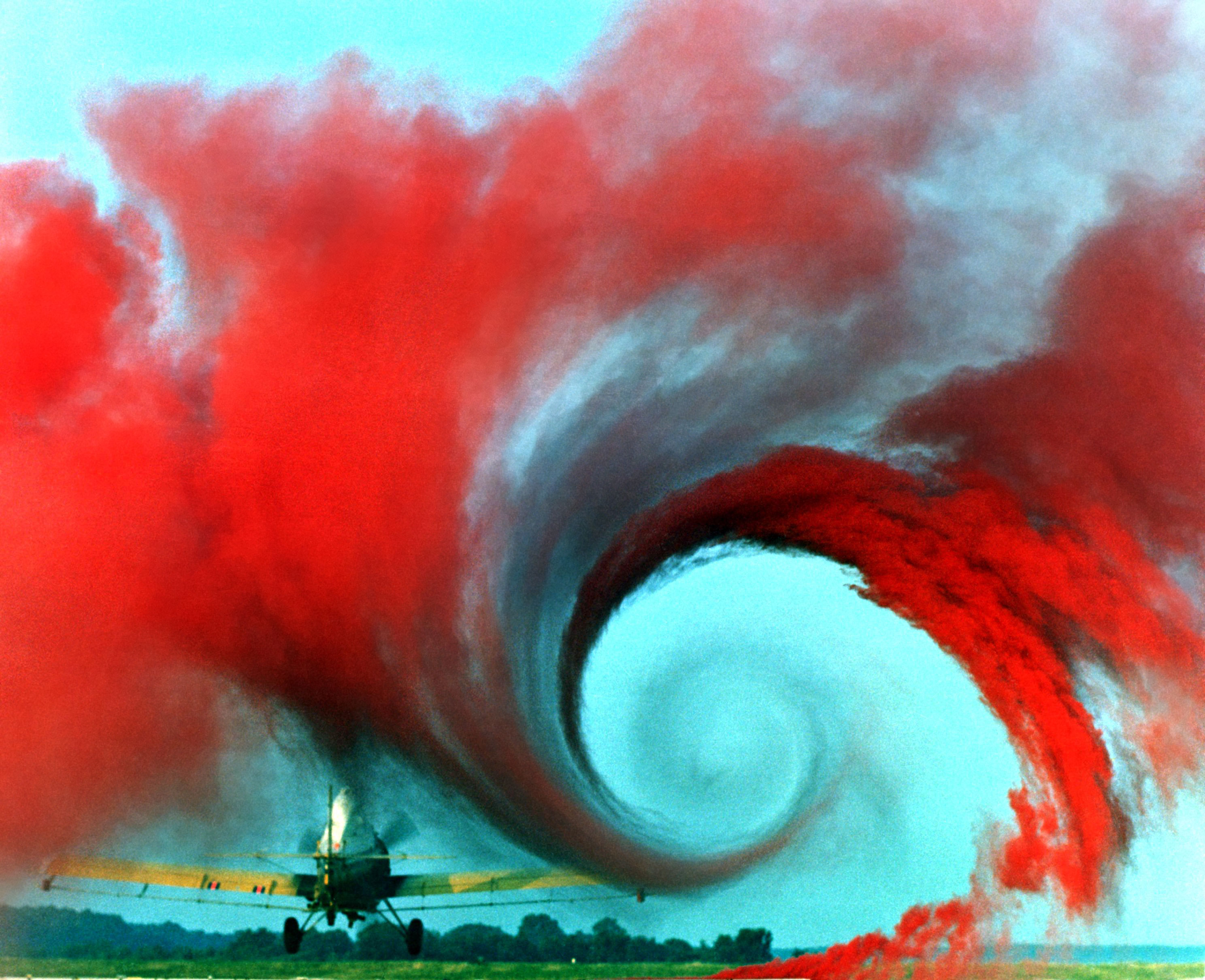
- Hero photo: NASA Langley wingtip vortex (colored smoke), Wikimedia Commons (public domain)

Related reading: OpenAI Named Its Next Machine Astra. Then It Solved Ten Problems Humans Couldn't — for $2,000. · OpenAI Is Done Training on the Live Internet. In September, a Model Found a Misconfiguration and Got Out. · OpenAI's Valuation Just Got Marked Down $150 Billion — and It's Being Reported as a Triumph · Replit Just Dropped Anthropic for OpenAI. It Was One of Anthropic's Top Five Customers.
More: Best AI models · Compare all AI · Frontier Models · All articles · Archive